

Bamboo Notes from the Western Ghats
Introduction
The presence of bamboo has been recorded since the Cretaceous period – about 144 million years ago – when the first flowering plants 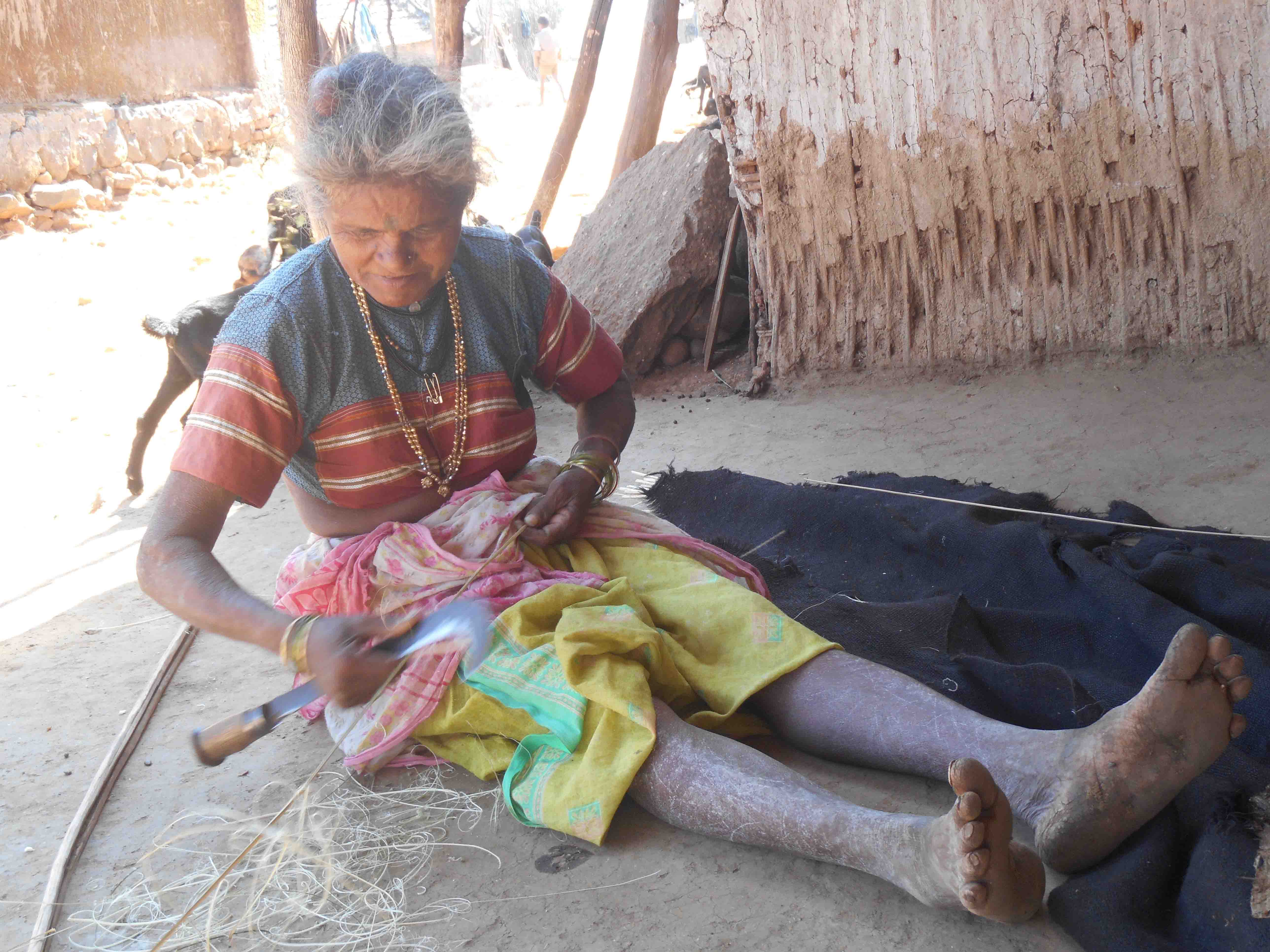 appeared. It found as far north as 50* N to about 47* S, including the Himalayas and the sub-Saharan regions. It is a grass and belongs to the Graminae/Poaceae family; it is extremely diverse with 1400 species grouped into about 115 genera; about 136 species are found in India, with 58 of them coming from the north-eastern states. After China, India is has the largest number of bamboo species; between the two countries more than half the total number of species in the world are found! An unusual characteristic of bamboo is it’s gregarious flowering once every few decades – the period specific to each species – and after which it dies; the multitude of seeds then sprout and grow back maturity.
Bamboo is known as the poor man’s timber and put to a variety of uses: as construction material, in basketry, as food, for musical instruments, and as fibre. Industrially too it is harvested for the pulp, especially in paper manufacture. There is an adivasi saying that it accompanies man from birth to death: cradles are fashioned out of it, as also the structure to carry a person on his or her last journey.
 In the North Western Ghats of India there are 4 major species of bamboo:Kalak or Katak (Bambusa bambos),Kondy mess (Bambusa balcooa), Manya or Maan vel (Dendrocalamus strictus), and Hudya bamboo (Oxytenanthera monostigma). Adivasi people like the Mahadev Kolis and the Thakar have mostly depended on bamboo for their livelihood. They make different types of bamboo products for sale in an annual fairs, yatras & bazaars. The leaves of bamboo are also used as fodder. Another local community, known as Burud, is also associated with bamboo. In Sanskrit burud means “basket maker”. These people live in urban areas and bamboo craft is a major source of their livelihood.
Over the last 20 years, traditional communities that make bamboo articles suffer from a lack of bamboo. They buy their bamboo from outside the Konkan and the coastal belt. According to the adivasi people bamboo lengths that are 2 years old are appropriate for craft; the Thakar women say that the right period to sow bamboo is when south–west monsoon begins.
Reasons for decline of bamboo
Decreasing bamboo populations are a major threat to the livelihood of adivasi people. Some of the reasons for the decline in bamboo are:
In the north Western Ghats do not plant anything; they only conserve and manage most species. With regard to bamboo the adivasi does plant it and so after flowering, one by one most species have declined in numbers.
The present harvesting practice is hazardous to all bamboo species. The commercial pressure is a major reason behind unsustainable harvests. We need to change this (बाँस भी रहेगा और बांसुरी भी बजेगी!)
Bamboo plantations on commercial level have many policy related problems as the various departments (Forest, Agriculture, and Revenue & Social Forestry) are not coordinated. For instance, the National Bamboo Mission announced various schemes but implementation remained poor and did not reach the communities working with bamboo; or the Forest Department that planted bamboo but they could not select the useful species.
The youth from adivasi societies traditionally working with bamboo have no interest in their customary occupation. The educational system too does not encourage traditional occupations as livelihood options. In addition, technical training institutes (ITIs) do not consider bamboo craft for a short term course.
 Lokpanchayat’s initiative
Sangamner based Lokpanchayat (www.lokpanchayat.org.in) is an organization working with adivasi and traditional forest dwellers. They facilitate conservation, and other issues of rights, livelihoods and education among adivasi peoples. In particular, Lokpanchayat has formed NTFP-harvesting groups, training the members in sustainable harvest practices, value addition, and conservation skills and linking them with the Fair Trade market. Lokpanchayat organized regular value addition workshops and exposure visits for thefor youth with regard to bamboo. During the previous monsoon 150 mess bamboo (Bambusa Balcooa) rhizomes were planted in 5 selected Thakar villages, of which 50% survived. More than anything else, the belief that bamboo plantations will not work in heavy monsoon zones, has disappeared. It may be the beginning of reviving a bamboo-associated lifestyle!


About Post Author
