

The Forest with Diamonds: mining thoughts from Panna
Article by Snehlata Nath
Bundelkhand, an area famous for its history, forests, forts and temples was dry and hot by the end of March. The Flame of the Forest or Palash (Butea monosperma) was blooming and gave the landscape a beautiful colour along with the yellowing leaves of mahua. We were travelling through the area visiting mainly Gond tribal villages in and around the Panna Tiger Reserve and amongst the sandstone & diamond mines.
The Panna Tiger Reserve was established in 1981 over an area of 542.67 sq kms. It is one of the prized reserves of Madhya Pradesh. In 2008 it hit the headlines as all the tigers had been poached. A re-introduction of tigers was then done from Bandhavgarh & Kanha to Panna. [link]
Of late, the Panna Tiger Reserve was again in the limelight: due to the proposed Ken-Betwa river linking project the Reserve would lose 200 sq. kms of forest area. [link]
That the Forest Department agrees to schemes like the river linking project is not surprising. Nor is their show of power and authority over a few tribal people who have lived in the Reserve for several generations and are an 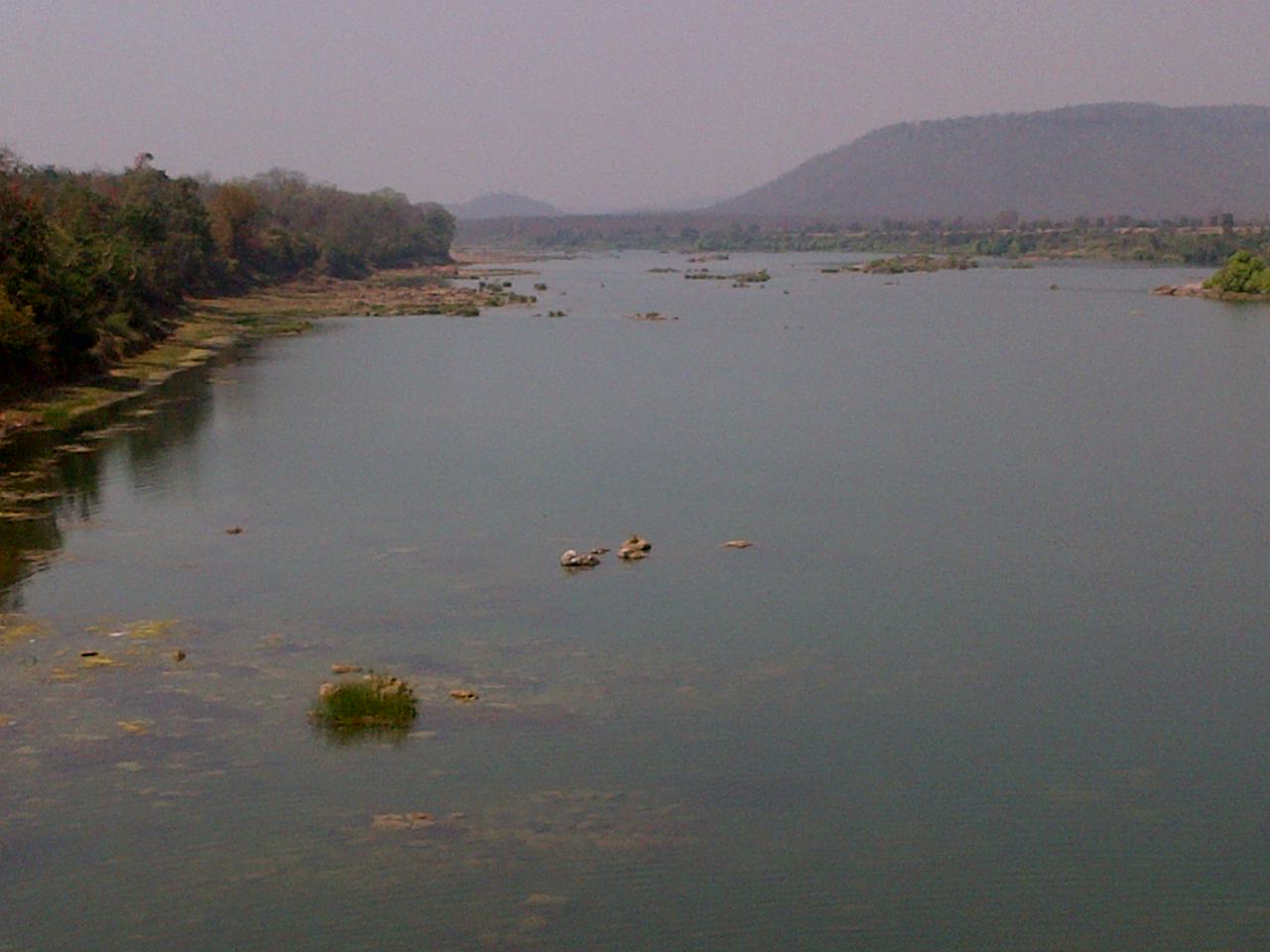 integral part of the forest- adivasi landscape and philosophy. Thirteen villages have been re-located from the Reserve. One of them is Umravan whose people have been given notices to relocate. During our visit to the village, we could not meet many people, as they were out harvesting wheat or collecting their rations which was available after a gap of two months. There were discussions regarding the rehabilitation/compensation amount per family and the Rs 10 lakh package from the Central Government. The MP Government does not contribute any amount for the land and relocation, but adjusts it within the package. The state of the people already in the relocation sites and the different aspects of `loss’ they suffer was discussed in detail.
National Mineral Development Corporation (NMDC) has the largest diamond mine in the area, bordering the buffer zone of the tiger reserve. An average of 100 tons of earth (tuff material1) is dug up to get 10 carats of diamond. There is much disturbance of the earth, of the forests and to the people to get a bit of the shiny stone
Private mining of diamond takes place on leased land all around Panna. Farmers lease their land to a lessee in search of diamonds and a system of sharing is worked out between them. Legally, the mines department registers and takes a fee for this purpose and is also the buyer of the diamonds. However, this may not be strictly followed by the lessee, who can make more money by avoiding the auction system of the government. More importantly, the labour contract for finding the stone amidst a huge amount of kimberlitic soils is taken by poor contract labourers. They have no share in the diamond sale, but get their daily wages.
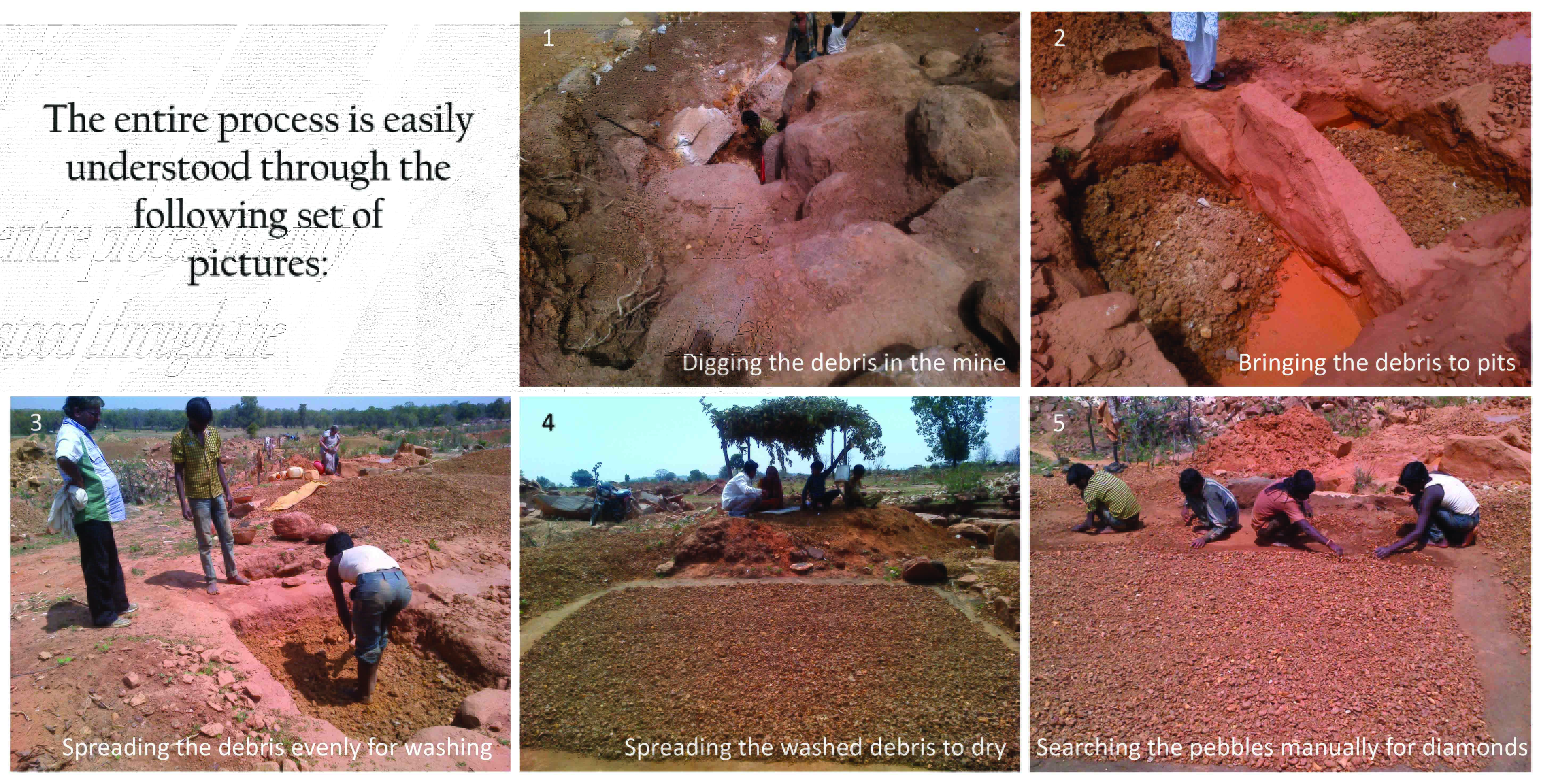
In the scorching heat these young boys search for diamonds, earning between Rs 130-150 per day. Their health is poor and they suffer from bronchial problems. This is brought about by the combined impact of hard work, inhaling 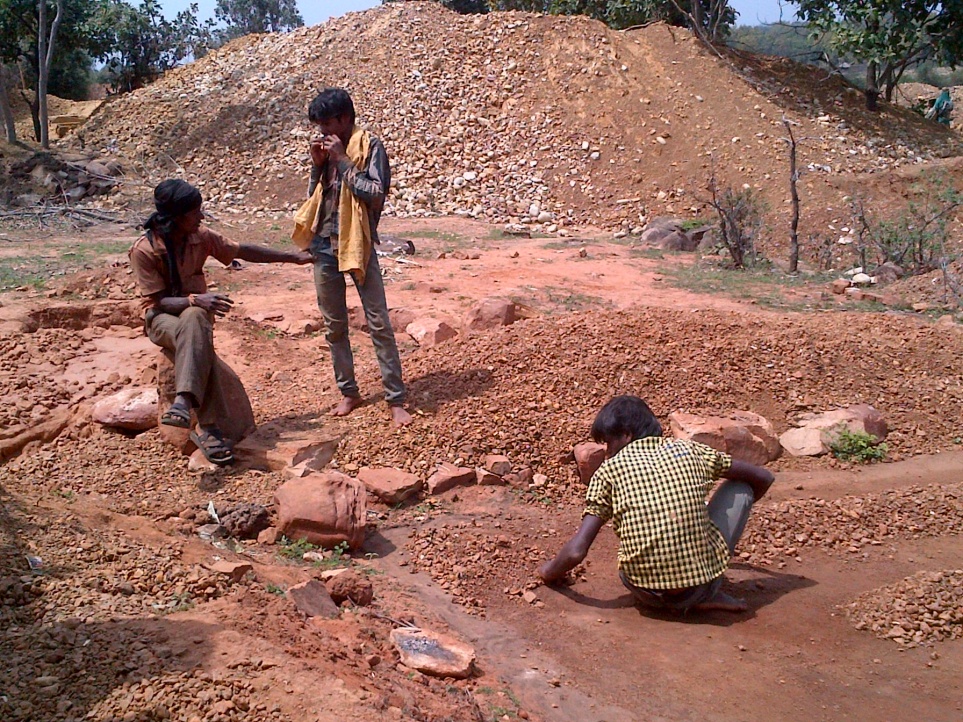 dust and smoking, and various kinds of substance abuse. Their feet are hardened by working barefoot in the pits with prospective diamond gravel and water to wash the soil off. They wear no protective gear, nor are they be protected from falling stones and gravel. Urmila’s husband had to have three operations in his leg to save it after a huge boulder crushed it.
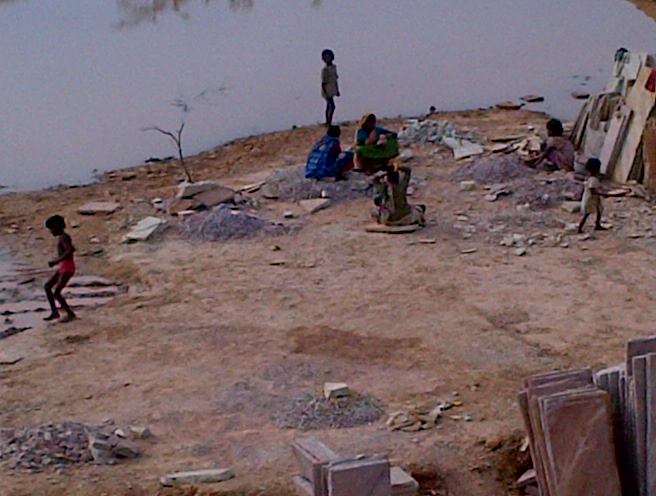
Women and small children also work in these mines under similar conditions; many families migrate from villages elsewhere and settle near the mines in temporary structures to do the work. Most private mines go on for up to 3-4 years, after which they hit a rocky base. The ground is then levelled again for agriculture.
 The lease owner we spoke to said that he had not found diamond for the past 4 months and that this trade was one of luck. A tempting gamble for those who have seen success earlier, private diamond miners stake all their savings and resources when they choose such a livelihood option.
Sandstone mines are also privately owned and repeatedly sub-contracted. Hiring contract labour frees the owner from the responsibility of any accident and compensation, and related problems to the worker. The Labour Department has done little to take care of the health and work conditions of the workers and children in the mines.
Yousuf Beg from Prithvi trust and R. Sreedhar and his team from Environics Trust have been working in this area since long. They have consistently lobbied for better working conditions and highlighted the cases of silicosis in the area. After a long battle 4 widows of silicosis victims were given Rs. 3 lakh each as compensation this March. The 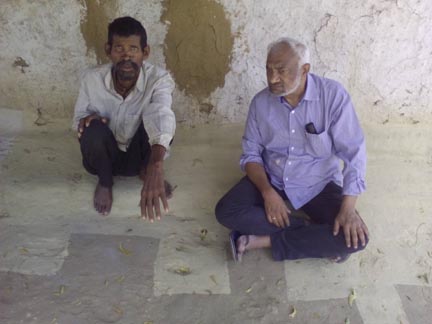 government should soon open its eyes to the working conditions of adivasis in the mines, stop illegal mining and ensure the rights of the workers.
Sreedhar with a silicosis patient in Umraven, who will be relocated from his home
Faisal, the 10 year old son of Yousuf Bhai, who is often part of all these conversation once asked innocently, “…do we really have to dig so much and do all this work for one piece of diamond? Is it so important?”
I pause and think whether we really need to wear these diamonds by exploiting the land, displacing people and leaving the workers with silicosis? I am sure we have many lessons to learn from the adivasis of Panna and can change our development programmes to be more humane. It is possible to have a development agenda that does repeatedly displace adivasis due to mining, tiger reserves and river linking projects.
1 Tuff is igneous rock found belotow the topsoil and is formed due to volcanic action. Most coal and diamonds are buried under tuff in volcanic zones, as in Panna


About Post Author
