

Sowing a Seed – The Good, the Bad and the Unknown
Nilambur, 2016
Across the world hunter-gatherer societies, like all societies, have had to adapt to modern developments. Yet, what makes these societies different  is their small populations, their isolation from the mainstream and their vulnerability. In the course of time, these small communities have faced much strife as the process of acculturation happened. This is the story of the Kattunaicken community, living along the Chaliyar river and its tributaries in Nilambur, Kerala. Historically, these people lived along the western slopes of the Nilgiris, a region dominated by wet evergreen forests. Like most rainforest people, they too foraged and hunted monkey and trapped small game for their food, and fished in the rivers. Yams, tubers, bamboo shoots, various greens, honey, bee-brood and larvae were other foods that they lived on.
A lot has changed from the earlier way of life. The Kattunaickens now live in `colonies’, clusters of concrete structures built for them by the government. These colonies are at the fringe of the forest; homes are surrounded by small patches of land, usually a third of an acre. Over years, many development schemes have intervened and planted areca nut, coconut, pepper and some fruit trees. In some villages, large forest trees still engulf their small houses. Kattunaickens, like many other such communities in Kerala, were not given enough land to cultivate so that they transformed into plantation workers, timber loggers and coolie workers to the landlords in the region. No agriculture, no homestead gardens, no drying yards, winnowing baskets etc. can be seen in these settlements. What still dominate their homes are dammar bees in split bamboo, their honey hunting gear, the baskets they use for NTFP collection, and the fish traps.
Since the Forest Rights Act 2006 came into play, there are large questions about the individual claims of land for these communities: can the 20-30 cents allotted to them be considered their individual claims? Will it suffice for cultivation? Kathnaickens are categorized as Particularly Vulnerable Tribal Groups (PVTGs) by the government and  have access to special benefits through the schemes of the Integrated Tribal Development Plan (ITDP). Besides this, , how is land useful to a community that has no tradition of cultivating anything, of even sowing a seed?
Today they completely depend on the Public Distribution System (PDS) scheme for their food supply and this exclusive dependency on free rice, without any nutritional supplements, has led to a deterioration of their health; ill-health may have affected their food-gathering habits too.
In the Grama Sabha (Oorukootam) constituted by the FRA, the members decided to address malnutrition in the community. They decided to ‘sow some seeds’ and improve the food basket! Developing a kitchen garden was a first step in cultivating some vegetables in their backyard and close to their homes. About 30 families planted pumpkin, amaranths, cowpeas, bitter-gourd, brinjals, tomatoes, chillies. For the first time the families in two settlements planted tapioca, fencing the crop with nylon nets and bamboo to protect it from wild boar. We now await the results of this venture: how much do they eat? How much to sell? Do they 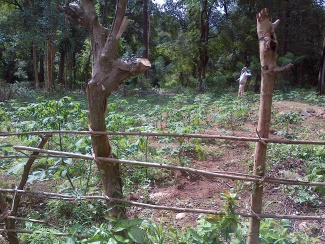 remember the ways of storing and drying cassava? How does it feel to be cultivating a crop?
Keystone Foundation has made much effort to support this initiative. It has also launched a Health and Nutrition project, “Unave Marundu” (food is medicine). Issues related to food growing, eating and buying are being addressed with cultural sensitivity amongst the communities it works with. Yet, some questions remain: has this step brought the Kattunaicken further into the mainstream? Has the focus on land rights and nutrition sidelined deep-rooted knowledge about hunting and gathering? Do the choices people make forever change their traditions, social bonds and a way of life?


About Post Author
